


Visit our office
Address
439/2 South Paikpara,
Kallyanpur, Dhaka-1216.
Tel: +880 1781 863042
Email: info@epoxypuspecialistbd.com
Expansion joint in building
In building construction, an expansion joint is a mid-structure separation designed to relieve stress on building materials caused by building movement. Building movement at expansion joints is primarily induced by:
- thermal expansion and contraction caused by temperature changes,
- sway caused by wind
- seismic events
- static load deflection
- live load deflection
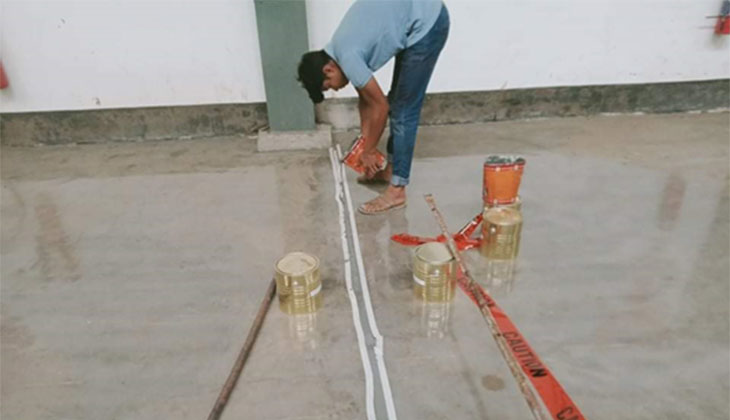
Because the joint bisects the entire structure, it marks a gap through all building assemblies–walls; decks; plazas or split-slab concourses; foundation floors and walls; roofs, planters, and green roofs; fire-rated demising walls and floors; interior floors; etc. This gap must be filled to restore the waterproofing, fire proofing, sound proofing, air barrier, roof membrane, trafficable surface and other functions of the building elements it bisects.
Expansion joint systems are used to bridge the gap and restore building assembly functions while accommodating expected movements.
The term “movement joint” has been widely adopted in preference as it more appropriately encompasses the fact that building movement results in both compression and expansion of the material installed. For example, when a structure heats up, the building materials from which it is built expand. This causes the “expansion joint” to close down, thereby compressing the joint system installed in the gap.
Conversely, when the temperature drops, the materials cool causing the joint gap to open. This requires the joint system to expand to follow the joint movement.
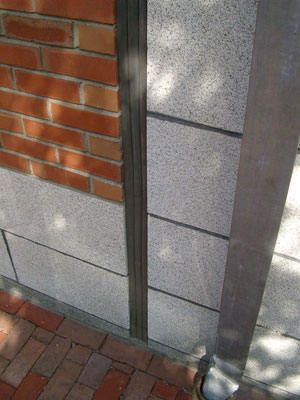
Expansion Joint Transitions
Expansion joint transitions are essential for ensuring a sealed, safe, and energy efficient building envelope.
Continuity of seal at changes in plane and direction, and between expansion joint systems, is achieved when factory-fabricated transition assemblies are specified and installed.
Whenever possible, transitions should be factory-welded to the ends of longest possible lengths of straight-run material. This minimizes the number of field-welded connections – saving time and reducing risk.
Expansion joint CAD details, 3-D inventor files, isometric, axonometric, and BIM files can assist in designing for continuity of seal.
Collaborative 3-D expansion joint design methodology ensures that all parties involved in delivering trouble-free expansion joints works together for that shared goal.
It is now possible designers to wrap the entire building envelope, as well as ensure that life-safety is addressed by specifying expansion joint systems that tie into one another and are warranted for continuity of seal between like or dissimilar technologies.